

With one of the UK’s fastest growing tech sectors, a uniquely connected infrastructure, and AI job growth outpacing London, there’s a reason Leeds is a top city for start-ups and scale-ups.
But ask local innovators what makes the city such a special place to do business, and you’ll hear how, in Leeds, connections come with a friendly face and a warm welcome.
Big city buzz. Local Leeds welcome.
Frequently voted one of the top places to live in the UK, Leeds is vibrant, diverse and powered by partnership.
This means innovation doesn’t happen in isolation. It’s propelled by one of the UK’s most interconnected ecosystems, bringing together world-class academic research, a thriving industry cluster, and a uniquely cohesive health and care partnership.
But with so much on offer, how does Leeds make it as straightforward as possible for innovators to navigate its strengths and opportunities?
In 2024, the city answered this question by launching Health Innovation Leeds – a friendly front door to its internationally-renowned ecosystem.
Innovation Specialist at Health Innovation Leeds, Stephen Blackburn, explains how Leeds may be a global leader in AI, digital and data, but it hasn’t lost the human touch when it comes to innovation.
“Leeds ranks as one of the top three locations for healthtech globally, so unsurprisingly there is so much support on offer here – and this could be overwhelming for businesses navigating the system.
“Equally, partners in the city are doing amazing work which can be even more powerful when it’s joined up.
“That’s why my role was created, acting as both a connector and a convenor.
“Whether I’m speaking to businesses, academics or system partners, my thoughts are always about how we improve outcomes for people, so it’s about taking a person-centred approach. If there’s a challenge to solve, I’m not simply signposting someone to an organisation, I’m linking the right people and teams to unlock opportunities.
“I often hear that people find Leeds a friendly, welcoming and supportive city, and I enjoy being part of that, helping innovators get where they need to be – from opening doors to funding or product development avenues, to connecting them with opportunities to test and refine their ideas.
“At the same time, I work closely with partners across the city to bring people together, helping them collaborate across boundaries so we can design joined-up services and deliver the best possible health and care.”
Partnership powered by purpose
Combining global credentials and local spirit, Stephen describes Leeds as not only a place to innovate, but a city where powerful connections spark powerful change.
This is thanks to a shared mission that fuels all the city does – bringing partners together to tackle health inequalities and improve outcomes for communities in Leeds and beyond.
This is guided by the Leeds Ambitions – more than a policy statement, these priorities represent a practical, city-wide mission that brings together the NHS, businesses, universities, and government.
And Leeds is not just aligned at a local level – crucially, the city is responding to the UK’s most important health priorities, and ahead of the pack when it comes to delivering on them.
Tackling inequalities locally, leading change nationally, and blazing a trail globally, Leeds is the government’s go-to location to lead the UK’s health mission, breaking ground in the first wave of the National Neighbourhood Health Implementation Programme.
Stephen explains how this shared purpose creates a unique momentum and direction for innovators:
“We want businesses to do well and thrive – so it’s important that their products and services are fit for purpose and address a real need.
“In Leeds, innovators can build, test and scale solutions in real-world environments that reflect the models of care the country is actively investing in – integrated, preventative, community-based, and digitally enabled.
“We’re already exploring solutions around prevention and early intervention, not just treatment, through innovative approaches to care closer to home.
“It’s my role to connect innovators with the right partners that could lead to a trial in a real-world setting, or practical support from organisations like the Medicines and Healthcare products Regulatory Agency (MHRA) hub or Health Innovation Yorkshire & Humber’s Propel programme.
“Businesses are also often looking for academic support to provide independent analysis and rigour to their solutions. With academic brilliance from three world-class universities, in Leeds we can connect innovators with cutting-edge research to accelerate real-world impact.”
“Ultimately, it’s all about how we can make the most impact, together. We’re focused on improving people’s lives, finding smarter and more efficient ways of working, and making the best use of resources.”
“I often suggest to innovators to make sure they’re familiar with the government’s 10 Year Plan for Health – Fit for the Future, the UK’s neighbourhood health framework, and the Healthy Leeds Plan. These are a great starting point and provide a really good insight into the direction of travel at national and local levels.
“For example, Leeds has identified four top health priority areas as a system: improving community mental health services; reducing cardiovascular disease; supporting children and young people to have the best start in life; and, expanding care delivered at home, or closer to home.
“Both the Neighbourhood Health and Healthy Leeds plans highlight earlier intervention and prevention, focusing on the areas of greatest need, improving patient experiences and outcomes, and realising best value for money as key priorities. It’s important that we don’t just focus on a person’s illness, but how we keep them well, for longer – socioeconomic factors play a huge role in our health and wellbeing.
“Innovation that responds to local and national priorities has a greater chance of success further down the line.”
From introductions to implementation
In Leeds, networks don’t just move ideas from A to B – they open doors, create opportunities, and link the right people to turn vision into reality. One business who has experienced the benefit of this unrivalled connectivity is healthtech start-up, Humant.
Founder and CEO, Dominic Kirkman, said: “At Humant, we provide remote health technologies to enable Occupational Therapists (OT) to work remotely – with the ultimate mission to empower people to manage their health at home.”
This includes supporting OTs to deliver remote home assessments using 3D scans, images, and videos captured via smartphone. It supports clinical decision-making, reduces delays and improves patient safety by streamlining adaptive equipment planning, cutting costs and increasing capacity across NHS and social care services.
Dominic explains how Health Innovation Leeds has been integral to moving the company forward in its journey: “The Health Innovation Leeds team have been incredibly supportive in connecting Humant with the right people across the West Yorkshire system.
“Stephen introduced us to senior OT leaders at Leeds City Council and Leeds Community Healthcare NHS Trust, which led to further introductions with local authorities in the region, valuable feedback on our remote OT solution and agreement to scope and deliver a multi-organisation trial together.”
Reflecting the Leeds-based company’s commitment to supporting local priorities, Humant was selected as a finalist in the Mayor’s Big Ideas Challenge, which backs innovative solutions to address health inequalities in West Yorkshire. As well as funding, finalists receive a package of support to accelerate the development of their solutions to improve health and wellbeing across the region.
Dominic added: “Stephen also supported a rapid turnaround introduction with the University of Leeds to prepare an NIHR grant submission – something we simply wouldn’t have achieved without his help – and has continued to make introductions to potential future customers.”
From personalised connections to person-centred care
As well as supporting innovators, Stephen’s role is about bringing the system together – helping partners rethink how health and care services connect around people’s lives.
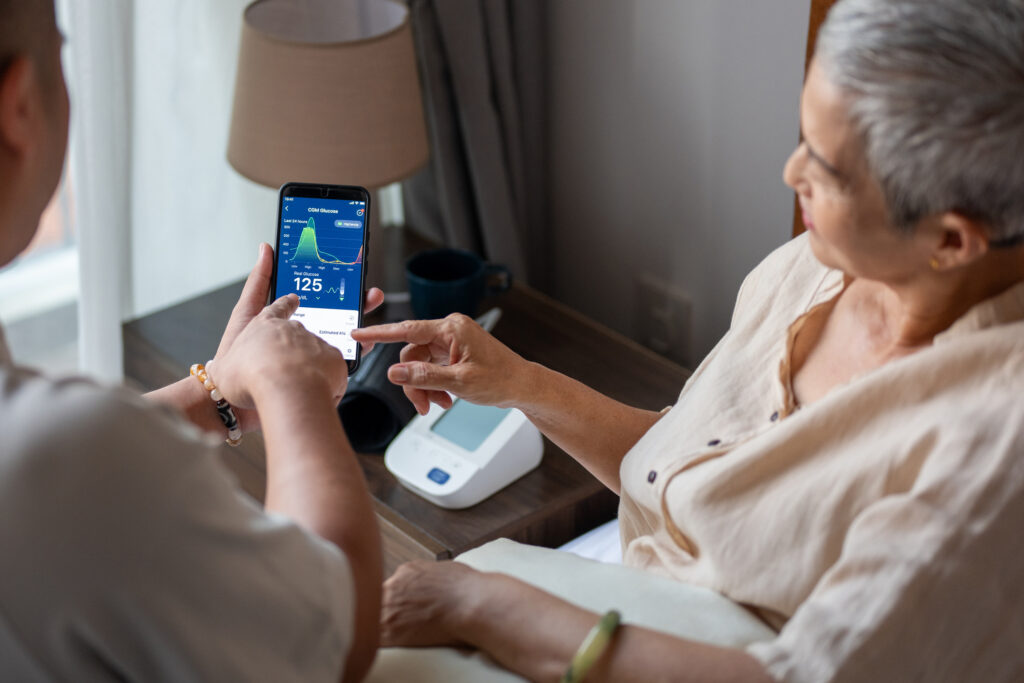
As Chair of Leeds’ Technology Enabled Care (TEC) working group, Stephen unites colleagues from the NHS, local authority, academia and the third sector to take a joined-up, person-centred approach to how wearables, sensors, and devices such as smart speakers, might be used more effectively across the city to support a person’s health and care.
Stephen said: “TEC covers areas such as remote monitoring, virtual wards and telecare – in short, tools that help people manage their health, recover from illness, and live independently at home.”
The direction of the TEC group underlines the city’s trailblazing focus on the national priority of neighbourhood health.
A report from the King’s Fund in 2024 confirms that better digitally enabled care in the community has the potential to improve quality of life for many people who have ongoing care needs, such as people living with neurodiversity, people living with physical disabilities, and people with complex long-term conditions.
In Leeds, organisations like Leeds Teaching Hospitals NHS Trust have demonstrated the immense potential of technology enabled care to offer better support for patients, and more efficient use of resources for the system.
Virtual wards at the Trust have been described as a ‘gamechanger’ in delivering safe and effective care in a different way, with overwhelmingly positive patient feedback, helping people to feel more comfortable and reducing travel time. It has also saved almost 11,000 bed days and delivered £4.2 million in efficiency savings since its introduction in 2023.
Now, Stephen explains, the TEC group is bringing system partners together to break down organisational boundaries to co-develop a city-wide approach that joins up our TEC approach across primary care, community, hospital and social care. The goal is simple: from a person’s perspective, care should feel seamless – whether they’re at home, in hospital, or moving between services.
“There’s a huge opportunity to connect tech up: too often, technology is used in silos, with different organisations adopting their own solutions that only support someone while they are under their care.
“Our aim is to change that.”
Stephen continued: “We’re thinking carefully about how data is shared, how systems connect, and how both staff and the public feel confident using new approaches. We know that, while technology can improve independence and quality of life – particularly for people with long-term conditions or disabilities – it works best when combined with human support, not as a replacement for it.
“We’re designing a connected, person-centred model of care. One that has the potential to improve lives, support independence, and make services work better for everyone – it’s exciting, and if anywhere has the right partnerships and infrastructure to make it happen, it’s Leeds.
Why Leeds?
Stephen explains: “Leeds is a place where innovators can get stuff done. Whether that be very early-stage discovery, through to trials, and ultimately, delivery as part of a forward-looking health and care ecosystem.
“We’re a great city for innovators for a number of reasons. We have a densely connected centre, where you’ll find world-class universities, one of the country’s biggest teaching hospitals and thriving industry, all side by side and working together to support collaboration across sectors and between businesses. Our population reflects the diversity of the UK, meaning that if it works in Leeds, it is likely to be easily replicated in other parts of the country – and globally.”
“We have a ‘can do’ attitude in Leeds that I really like – I enjoy getting out and about to promote what a great collaborative city we are, and how we go the extra mile to make amazing things happen.”
Advice for innovators
So, what advice would Stephen give to innovators based in Leeds, or looking to land here?
“If you want to innovate in health and social care, Leeds is a great bet. We’re here to give you all the support we can to help you succeed – so don’t go it alone: get in touch and let us know if we can get you where you need to be.
“I have a good network on LinkedIn, so please do follow Health Innovation Leeds and find me there if we’re not connected already. You’ll also find me speaking at or attending various events across the region, so I always welcome a chat and the chance to connect.”
The city has recently taken support for innovators to the next level, with the launch a £2 million Health Innovation Leeds Incubator, led by Nexus at the University of Leeds together with Leeds Beckett University and Leeds Teaching Hospitals NHS Trust, working closely with Leeds City Council.
If you’re a healthtech start-up, SME or growing business based in West Yorkshire, the Incubator could help you overcome barriers to growth, access the right expertise, and scale successfully.
Whether you’re developing a new digital health product, testing a breakthrough idea, or trying to navigate regulation and NHS adoption, the Incubator connects you with the people, resources and opportunities that move innovation forward.
Stephen also sits on the Leeds Digital Health committee – a community initiative that brings together healthcare and technical professionals – and encourages innovators to attend their quarterly themed events that offer valuable insights and networking opportunities (find out more via their LinkedIn page).
Bringing unmistakable Leeds energy to the global stage
This June, Leeds is attending Europe’s biggest health innovation conference, HLTH Europe, where Stephen will be one of the friendly faces connecting innovators with what’s on offer here in the UK’s third largest city.
Leeds is an official event partner for 2026, and this year you’ll find some of the city’s most influential organisations all in one place, as part of a dedicated Health Innovation Leeds exhibitor stand, including:
- The University of Leeds’ global innovation community, Nexus;
- One of the country’s biggest teaching hospitals – Leeds Teaching Hospitals NHS Trust and its pioneering Innovation Pop Up connecting clinicians and innovators; and
- Leeds Beckett University (LBU), showcasing their newly launched Carnegie Innovation – a sports healthtech incubator – along with the Innovation Pathways (In-Path) programme – led by LBU, this major new collaboration with universities across West Yorkshire fast-tracks innovation in health technologies.
➡️ Whether you’re planning to attend HLTH Europe, or following from afar for insights and inspiration, there will be plenty of opportunities to connect and collaborate. Visit our HLTH Europe page to find out more – and if you’re thinking of joining us in Amsterdam, access an exclusive ticket discount for our Health Innovation Leeds community: HLTH Europe – Health Innovation Leeds
➡️ Fancy a conversation? Drop us a line at [email protected] and tell us how we can help.
Image credits: istock.com/simon2579